

April in Austin: The Maintenance Window That Matters Most
The bluebonnets are out, the evenings are still comfortable, and most of us have not turned on the AC yet. But we are about to.
This window between cool and scorching is the single best time of year to address your home's systems, your yard, and your exterior before Central Texas heat turns small problems into expensive ones. Austin does not follow a four-season calendar the way much of the country does. Spring is compressed, the transition is fast, and summer arrives hard. That makes April uniquely important. It is the last reasonable window to get ahead of your home's biggest seasonal demands before you are managing repairs in 100-degree heat.
At Shipman Partners, we work with homeowners year-round. The pattern is consistent: the clients who stay ahead of maintenance never face the $15,000 surprises. The ones who react do. This checklist is built specifically for Austin homeowners, with local climate, soils, pests, and conditions baked into every item.

Six Reasons Austin's Spring Window Is Different
Peak Pollen
Cedar season wraps up, but oak and grass pollen surge through April, clogging filters and degrading indoor air quality fast.
Pest Activation
Subterranean termites swarm in March and April here. Fire ants rebuild mounds. Silverfish and roaches move indoors as temperatures rise.
HVAC Stress Window
Austin averages 111 days above 90 degrees. An AC system that has not been serviced since last summer is a breakdown waiting to happen.
Spring Storm Season
April and May bring the highest rainfall totals of the year. Roof, gutters, and drainage should be cleared before the heavy rains hit.
Landscape Growth Surge
Warm-season grasses wake up and grow aggressively in April. Miss the fertilization window and you will fight weeds all summer long.
Irrigation Timing
LCRA and Austin Water typically lift winter watering restrictions in April. The first run of the season exposes broken heads and leaks.
15 Things to Do This Month
This is the highest-priority item on this list for Austin homeowners. Your AC will run for roughly six to seven months straight in Central Texas, often cycling continuously through August and September. A system that has not been serviced since last season is carrying worn belts, dirty coils, low refrigerant, or clogged drain lines into the hardest working months of the year.
Schedule a professional tune-up now while technicians still have availability. By June, the best Austin HVAC companies are booking weeks out. Have them check refrigerant charge, clean evaporator and condenser coils, inspect ductwork for leaks, clear the condensate drain line, and verify thermostat calibration. Replace the air filter and consider upgrading to a MERV-11 or higher filter to handle the oak pollen load.
Austin Energy offers a free Home Performance with ENERGY STAR program that includes HVAC assessments for qualifying homes. Worth checking before you pay for a private tune-up.
Subterranean termites in Central Texas typically swarm between March and May, which means right now is when colonies are expanding and scouting new structures. Look for discarded wings near windowsills and entry points, mud tubes along your foundation walls and pier-and-beam supports, and soft or hollow-sounding wood around door frames, baseboards, or decking.
Fire ants rebuild aggressively after winter and will colonize any undisturbed soil near the foundation. Inside, watch for silverfish and American cockroaches, both of which move indoors as outdoor temperatures climb. Seal any gaps around plumbing penetrations, especially under kitchen sinks and around dishwasher drain lines.
Homes built on pier-and-beam foundations, which are common in older Central Austin neighborhoods, are particularly vulnerable to subterranean termites. An annual inspection by a licensed pest control company is worth the cost.
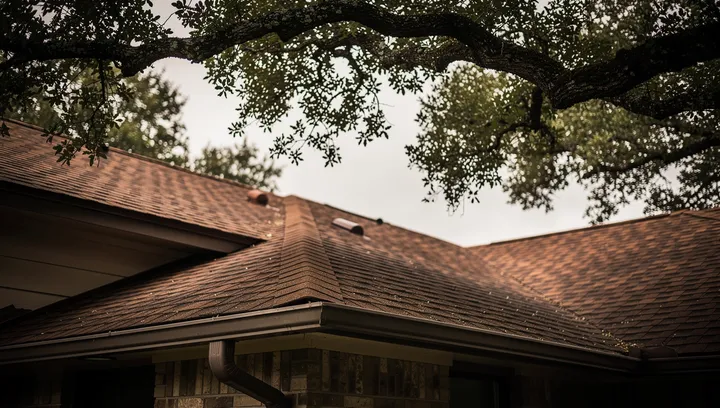
April and May represent Austin's rainiest months, and the storms that move through Central Texas can be intense. High winds, large hail, and fast-moving downpours test every surface of your home. Clogged gutters from winter debris will overflow and push water against your fascia, soffits, and eventually into your attic or wall cavities. Clear them out now.
Walk the perimeter and look for lifted or missing shingles, granule loss in gutters (a sign of aging asphalt shingles), and any soft spots or discoloration on soffits. If your home is older and has not had a roof inspection in several years, April is the right time to get one. Catching a borderline roof in spring gives you time to plan before next winter.
If you experienced hail in 2023 or 2024, both active hail seasons in the Austin area, it is worth a free inspection from a local roofing company. Hail damage is not always visible from the ground but can void shingle warranties and lead to accelerated failure.
Austin Water typically allows expanded irrigation schedules to resume in April as temperatures rise. Before you flip that system back on, run each zone manually and walk every head. Winter can shift or crack spray heads, and roots grow into drip emitters over the dormant season. One broken head can waste thousands of gallons, and in a city that regularly faces Stage 2 water restrictions, that is both costly and avoidable.
Check spray coverage for overspray onto driveways or structures, adjust head direction where needed, and verify that your controller's schedule reflects the current watering day restrictions for your address. If you do not have a rain sensor or smart controller already, April is a good time to add one. They pay for themselves quickly in an Austin summer.
Austin Water offers irrigation audits and rebates for smart controller upgrades through the WaterWise program. Visit austintexas.gov/waterwise for current incentives.
The two dominant warm-season grasses in Austin, Bermuda and St. Augustine, come out of dormancy in April as soil temperatures consistently reach 60 to 65 degrees. This is the correct window to apply a slow-release nitrogen fertilizer. Apply too early and you are feeding weeds. Wait too long and your turf enters heat stress without the nutrients it needs to establish a dense canopy.
If your lawn is thin or patchy from last summer's drought stress, consider aeration before fertilizing. Austin's heavy clay soils compact significantly, and a core aerator will help water and nutrients penetrate where they are needed. Pre-emergent herbicide applied in early April can also dramatically reduce crabgrass and spurge pressure you would otherwise fight all summer.
St. Augustine grass, the most common turf in Central Austin, is susceptible to take-all root rot in wet spring conditions. Avoid overwatering in April. If you notice yellow patches that do not respond to fertilizer, pull a plug and check for short dark roots rather than assuming drought stress.
Oak pollen in Austin is no joke. The Hill Country variety, including Live Oak, Spanish Oak, and Ashe Juniper, pumps pollen through April in quantities that coat cars and devastate a dirty HVAC filter in a matter of days. Check your filter now, and plan to check it again in three to four weeks during peak oak season. A clogged filter does not just reduce air quality. It restricts airflow, makes your system work harder, and can cause the evaporator coil to freeze.
While you are at it, vacuum all supply vents and return air grilles, and wipe down ceiling fan blades. A fan running on accumulated dust will distribute pollen throughout your home every time it cycles. Reverse your fans if you have not already. Counterclockwise rotation in spring and summer creates a direct cooling downdraft.
Air sealing is one of the highest-return investments an Austin homeowner can make. With electricity bills routinely running $300 to $500 in August for an average-sized home, every gap around a window frame or door threshold that is leaking conditioned air directly increases your monthly cost. Walk your home on a warm April day and feel for drafts around windows, exterior doors, attic hatches, recessed lights on the top floor, and plumbing penetrations.
Replace cracked or brittle weatherstripping on entry doors. It degrades faster here due to UV exposure and heat cycles. Check window screens for tears before you start opening windows in the evenings. Inspect caulking around window frames on the exterior. Austin's temperature swings cause caulk to crack and pull away from the substrate over two to three years, and a fresh bead takes 20 minutes and costs almost nothing.
Austin's combination of pollen, limestone dust, and organic debris from the surrounding Hill Country tree canopy leaves an impressive coat of grime on every horizontal surface by April. Concrete driveways, limestone patios, and wood decking all benefit from a thorough pressure wash before you start using outdoor spaces regularly.
On wood decks and fences, pressure wash first, let them dry completely for two to three days, then apply a UV-protective stain or sealant. The intense UV index in Central Texas breaks down unprotected wood quickly. A stained fence will outlast an untreated one by years. For limestone or concrete features, be mindful of pressure settings, as softer limestone can pit under too much force.
If your limestone or concrete has persistent dark staining, that is likely algae or lichen, which is common in shaded areas with Central Texas humidity spikes. A diluted white vinegar solution or an oxygen-based cleaner is safer on porous stone than bleach-based products.
Austin Water rates have increased significantly over the past several years, and even a small drip from a toilet flapper or a slow leak under a sink accumulates into meaningful cost over a summer. Open every cabinet under a sink and look for moisture rings, staining, or soft flooring. Check the toilet tank for slow running by adding a few drops of food coloring and checking the bowl 10 minutes later without flushing. Color in the bowl means your flapper is leaking.
Spring is also a good time to check your water heater's anode rod if it is more than three years old, flush sediment from the tank (especially important with Austin's moderately hard water), and confirm the pressure relief valve is functioning. Tankless water heaters should have their filter screens cleaned and descaled annually.
Live Oaks, Spanish Oaks, Cedar Elms, and Pecan trees, which are Austin's signature landscape trees, all flush new growth in April. This is the right time to assess their structure and remove any dead, crossing, or low-hanging branches before summer storms test them. A large dead limb over your roof or AC condenser unit is a liability, not just an eyesore.
Keep an eye on Oak Wilt, which spreads through root grafts between Red Oaks and Live Oaks and is a serious and irreversible disease in the Austin area. Do not prune oaks between February and June if possible. The sap-feeding beetles that spread Oak Wilt fungus are most active during this window. If you must prune, paint fresh cuts immediately with latex paint or pruning sealant.
Austin's Heritage Tree Ordinance protects certain large trees from removal or significant trimming. If you are unsure whether a tree is protected, check with the City of Austin Development Services Department before hiring anyone with a chainsaw.
Dryer vent fires are among the most common preventable home fires in the U.S., and lint accumulation in the vent duct is the primary cause. This is especially worth checking in homes with long duct runs, multiple bends, or flexible plastic ductwork instead of rigid metal. If your dryer takes more than one cycle to dry a full load, that is a strong sign the vent is restricted. Disconnect the duct and clean it from both ends.
While you are in the utility area, check your kitchen range hood's grease filter as well. April is the start of outdoor cooking season, but it is also a good time to clean the filter before indoor cooking picks back up. A grease-saturated filter is both a fire risk and a ventilation failure. Most are dishwasher safe.
Test every smoke detector and carbon monoxide detector in the home. Replace batteries in any unit that has not been changed in the past year, even if it has not beeped at you yet. Smoke detectors older than 10 years should be replaced regardless of battery condition. The sensing chambers degrade over time and may not detect smoke reliably. CO detectors have a similar lifespan and should be located near sleeping areas and on every floor.
This is also a good time to check that all GFCI outlets in bathrooms, kitchens, garages, and outdoor areas are functioning correctly by testing and resetting each one. Verify that window egress from bedrooms is operable and clear, which is important both for fire safety and for compliance if you are ever renting or selling.
Outdoor living is a genuine selling point and lifestyle feature in Austin, not just a nice extra. Covered patios, outdoor kitchens, and pergola spaces get heavy use from April through October here, and they deserve the same attention you give interior rooms at the start of the season. Power wash the concrete or flagstone, wipe down all furniture, check cushion covers for mildew, and fire up the grill or outdoor kitchen for the first cook of the season to burn off any residue.
Outdoor ceiling fans should have their blades wiped down and motors checked. Outdoor string lights or landscape lighting, particularly low-voltage LED systems, should have all connections inspected and any damaged wire segments replaced before they become a problem in the middle of summer entertaining.
Cedar and wood privacy fencing, which is the most common type in Austin's residential neighborhoods, takes a beating from the freeze and thaw cycles we occasionally see in winter, followed by the intense UV of spring and summer. Walk the fence line and check for loose boards, leaning posts, and any signs of rot at ground contact points. Posts set in concrete are particularly vulnerable to base rot if water pools around them.
If you have a retaining wall, which is common in older Travis Heights, Bouldin, and Westlake properties with significant grade change, look for bulging, cracking mortar, or efflorescence (white mineral deposits on masonry). These can be early signs of hydrostatic pressure building behind the wall from poor drainage. Caught early, it is a drainage fix. Left alone, it becomes a full wall rebuild.
The garage is the most common point of air infiltration into a conditioned home. It is also where many homeowners store seasonal items that now need to be rotated with spring and summer gear. Pull everything out, sweep and inspect the floor for oil stains or cracks, and reinstall items with summer access in mind. Check the garage door bottom seal. It is typically rubber or vinyl and degrades in Austin's heat over two to three years, leaving a gap that admits pests, humidity, and hot air.
If your garage is attached, the door leading into the home should be fire-rated and self-closing. This is a code requirement in new construction but is sometimes missing in older homes that have been updated informally. Check that the door self-closes completely and that weatherstripping seals the frame. This both improves energy efficiency and provides a meaningful fire barrier between the garage and living space.

"Owning a home in Austin is a real asset, but only if you treat it like one. The homeowners who stay ahead of maintenance are the ones who never face the $15,000 surprises."Allen Shipman, Broker/Co-Founder, Shipman Partners
What This Really Comes Down To
April maintenance in Austin is not about perfection. It is about protecting what is likely your largest financial asset before the hardest season of the year begins. A few hours spread across these tasks will save you money, reduce the chance of an emergency repair in August, and keep your home performing at its best.
We have seen firsthand how deferred maintenance affects home values and negotiation outcomes. Buyers notice. Inspectors find it. Sellers who have stayed on top of their homes almost always have smoother transactions and stronger final numbers than those who have not.
At Shipman Partners, we are a family-owned brokerage that grew up in Austin real estate. We think our job extends beyond the transaction, and helping the homeowners in our community take care of their investments is just part of how we operate.
Questions About Your Home's Value or What Improvements Pay Off?
Whether you are thinking about selling, recently purchased, or just want to understand your equity position in today's Austin market, we are always glad to talk through it.
Schedule a ConsultationShipman Partners is a boutique family-owned real estate brokerage serving the Austin metro area since 2010. We bring an analytical, client-focused approach to real estate, combining decades of experience with hands-on market knowledge.