
Thinking About Selling This Summer? Start Before You Feel Ready
Why the smartest sellers talk to an agent before the house is perfect.

If you are thinking about selling your home this summer, there is a good chance your mental checklist already feels too long.
Declutter the garage. Touch up paint. Fix the fence. Call a landscaper. Clean the windows. Replace the light fixtures. Decide whether the kitchen needs work. Figure out what your home is worth. Find out where you are moving next. Make sense of interest rates. Understand the new compensation rules. Somehow keep your life running while all of this is happening.
That is exactly why you should talk to a real estate agent sooner than you think.
One of the biggest misconceptions sellers have is that they need to prepare everything before calling an agent. They think the home has to be spotless, repairs have to be finished, landscaping has to be done, and every decision has to be made before an agent walks through the door.
That mindset costs sellers time, money, and sometimes leverage.
At Shipman Partners, we do not expect you to have everything figured out before the first conversation. Our job is to help you from day 0 to closing day. That means helping you decide what actually matters, what can wait, what is not worth spending money on, and how to prepare your home in a way that supports your goals instead of draining your budget.

The Real Goal of Pre-Listing PrepROI, not perfection
Before you spend money getting ready to sell, ask one question: will this help a buyer feel confident enough to offer more, offer faster, or offer with better terms?
That is the heart of return on investment, or ROI, when preparing a home for market. A full kitchen remodel might feel impressive, but it rarely returns dollar for dollar right before resale. New flooring throughout the home may seem like the obvious move, but depending on your price point and buyer pool, a flooring allowance or pricing strategy may be smarter. On the other hand, a few hundred dollars in cleaning, touch-up paint, lighting, landscaping, or small repairs can make a major difference in how the home photographs and shows.
Buyers are not only evaluating the square footage, finishes, and location. They are evaluating risk. A clean home signals care. Bright rooms feel larger. Working doors, faucets, lights, and hardware tell buyers the home has been maintained. A tidy yard makes the first photo more inviting. A well-prepared seller disclosure builds trust before the buyer ever submits an offer.
Involve an Agent Before Repairs or UpgradesMost wasted money is spent guessing
Many sellers accidentally spend money in the wrong places because they are trying to guess what buyers want. They repaint rooms in colors that still feel too personal. They replace flooring buyers may not like. They start a renovation that delays the listing by two months. They hire the wrong contractor for a project that never needed to happen. They make changes based on national advice instead of what is working in their specific Austin neighborhood and price band.
A good listing agent helps you avoid that. At Shipman Partners, we start with a walkthrough and a practical prep plan. We look at your home the way buyers, buyer agents, inspectors, appraisers, and online shoppers will see it. Then we help you sort the work into categories: what should be done before listing, what would be nice but not necessary, what may not be worth the cost, what could be handled through pricing, disclosure, negotiation, or buyer credits, what vendors may be needed, and what timing makes sense based on your next move.
This is especially important in the summer market, when timing can matter. Summer buyers may be trying to move before school starts, relocate for work, or use the longer daylight hours to tour homes after work. But summer also brings competition. If your home hits the market before it is ready, you can lose momentum in the first and most important week.
That does not mean you need months of prep. It means you need a plan.
What "Day 0 to Closing Day" Support Looks LikeA roadmap, not a rush to list
When you call an agent early, you are not signing up to list tomorrow. You are creating a roadmap. That roadmap can include:
Vendor referrals. We can connect you with vendors for cleaning, moving, handyman work, landscaping, pressure washing, hauling, staging support, painting, repairs, and other prep needs.
Repair and renovation guidance. We help you decide which repairs are worth considering, which updates are likely to have strong visual impact, and which projects may not pay off.
Pricing strategy. We review real MLS sold comps, active competition, current Austin micro trends, list-to-sale ratios, days on market, and months of inventory for your specific area and price range.
Photo-ready preparation. We help you understand what needs to be done before photography, including decluttering, furniture flow, lighting, curb appeal, and small repairs.
Lender coordination. If your sale is tied to your next purchase, we can help you connect with lenders early so you understand your buying power, timing, and financing options.
Move planning. We help you think through closing dates, lease-back needs, temporary housing, downsizing, moving vendors, and the timing of your next step.
Offer strategy. When offers come in, we help you compare more than price. Financing type, appraisal language, inspection expectations, closing timeline, contingencies, lease-back terms, and buyer strength all matter.
Closing support. Selling does not stop when you accept an offer. We continue helping through inspection, appraisal, title, repair negotiations, buyer financing, moving logistics, and closing.
The earlier we are involved, the more options you have.
Before You Spend Money Getting ReadyNot every update pays off
One of the most common mistakes sellers make before listing is spending money on the wrong things. A full kitchen remodel or new flooring throughout might sound like a good idea, but rarely returns dollar for dollar in today's market. Meanwhile, a few hundred dollars in paint touch-ups and lighting can make a home feel significantly more appealing in photos and showings.
The question is not how much you spend. The question is whether what you spend helps buyers feel confident enough to offer more.
This is why we want to see the home before you start spending.
Do Not Pick an Agent Only for the Highest PriceAn inflated number is a classic way to "buy the listing"
An inflated list price that the data does not support is a classic sign of an agent trying to buy the listing. It feels good at the kitchen table. You hear a number higher than expected, imagine the bigger net proceeds, and feel excited about what might be possible. But if the number is not backed by real market data, that excitement can turn into weeks of weak showings, buyer feedback that the home is overpriced, and pressure to make price reductions after the listing has already lost momentum.
At Shipman Partners, we anchor your price to real MLS sold comps and current Austin micro trends. We look at homes buyers are actually comparing against yours, not just broad estimates or national headlines. We show you the data in writing before you sign anything so you understand the reasoning behind the strategy.
Do Not Ignore Local Austin Market DataNational headlines lag what is actually happening here
National headlines are noisy and often lag what is actually happening in Austin. What matters is supply, demand, and pricing in your specific neighborhood, school district, property type, and price band. A home in one part of Austin may be facing a very different market than a similar-sized home across town. Entry-level homes, luxury listings, investment properties, and homes near specific schools can all behave differently.
That is why pricing should be local and specific. We look at months of inventory, recent MLS sold comps, active competition, pending listings, list-to-sale ratios, median days on market, price reductions in your area, buyer activity in your price band, and your home's condition and presentation compared to nearby listings.
Pricing is both math and strategy. The math shows us the likely range. The strategy depends on your goals. Do you need to sell quickly because you already found your next home? Are you willing to wait for a stronger offer? Would you rather price aggressively and create activity, or test a higher number with a plan to adjust quickly if the market does not respond? Those are the conversations we want to have before the sign goes in the yard.
Do Not List Before the Home Is Truly Photo ReadyBuyers decide in seconds
Rushing to market with dark photos, cluttered rooms, or obvious deferred maintenance can cost you showings during the first and most important week. Buyers swipe quickly. They may look at the cover photo, scroll through the first few images, and decide in seconds whether the home is worth a showing. If the photos feel dark, messy, cramped, or incomplete, many buyers will move on and never come back.
Being photo ready does not mean the home has to look like a magazine. It means the home should feel clean, bright, cared for, and easy to understand online. Before photography, we help you think through which rooms need decluttering, which lights need replacing, whether paint touch-ups are worth doing, how furniture should be arranged, what to remove from counters, how to handle closets and storage, what to clean or repair, whether landscaping needs a refresh, and which features to highlight in photos and video.
Professional photography should happen after the home is ready to shine, not before.
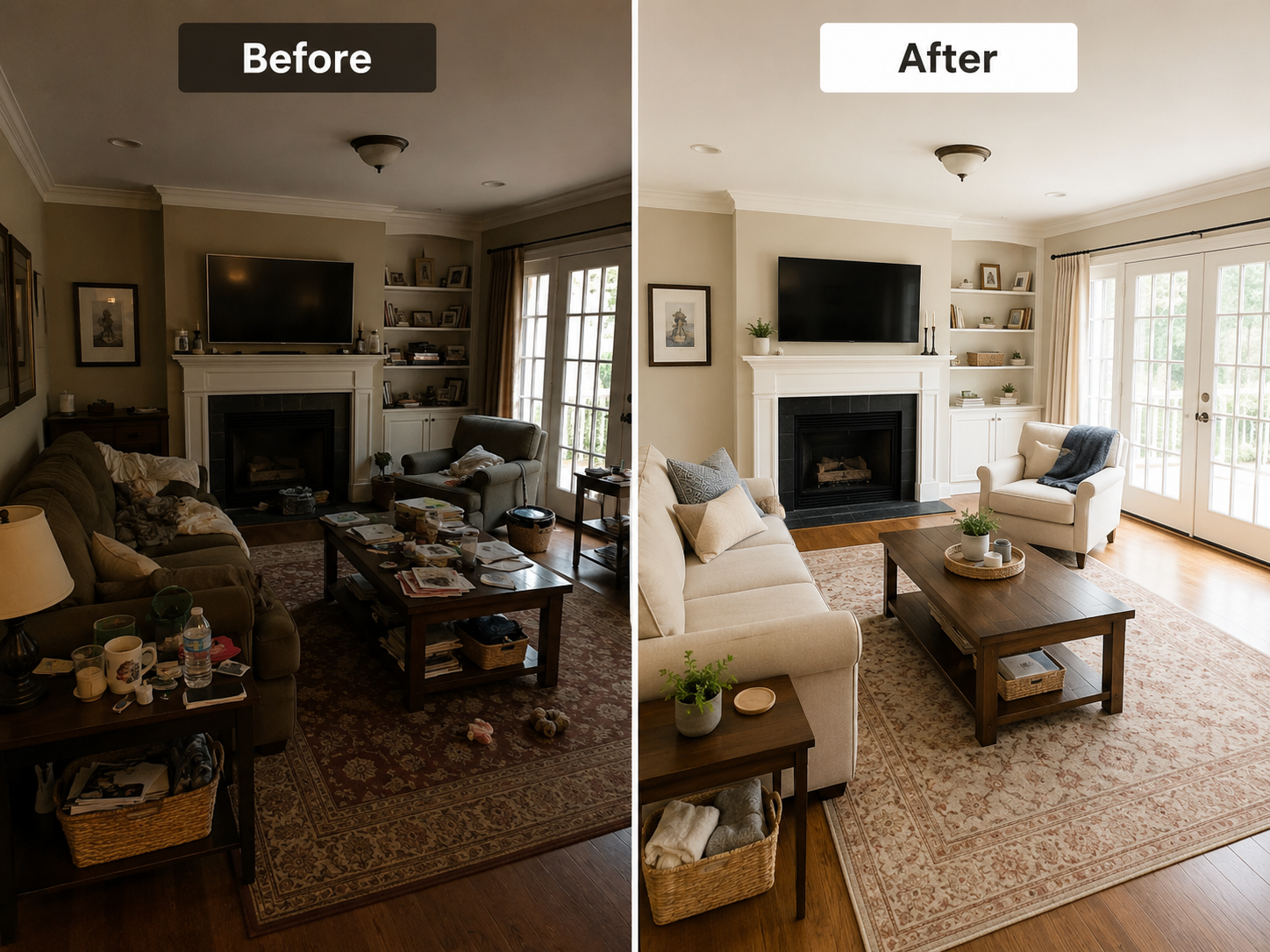
Do Not Cut Corners on Photos, Video, and PresentationMost Austin buyers meet your home on a phone screen first
Most Austin buyers first visit your home on a phone screen. Low-quality photos, missing room shots, awkward angles, dark rooms, or no floor plan can signal that the home may not be worth seeing in person. Strong media is one of the highest ROI investments you can make, because it shapes buyer perception before they ever step through the door.
At Shipman Partners, Allen handles all listing photography personally using professional-grade equipment and nearly four decades of photography experience. Every listing gets consistent, high-quality images edited in Adobe Lightroom and Photoshop, not outsourced to a third-party photographer who may have shot ten other homes that day. We also create video walkthroughs for TikTok, YouTube Shorts, and Instagram to reach buyers where they spend their time scrolling.
Just as important, because your broker is behind the camera for every listing, Allen spends meaningful time in your home before it goes live on the MLS. That hands-on time means he knows your property inside and out, can speak to its best features with buyers and agents, and can answer questions with real knowledge instead of guesswork. Many brokers never step foot in their listings. We make sure yours gets the attention and expertise it deserves from day one.
Do Not Make Showings Difficult or UnsafeAccess and safety, balanced
Once your home is live, access matters. Tight showing windows, requiring 24-hour notice for every visit, or leaving pets loose in the home can reduce buyer traffic. Every missed showing is a missed opportunity. On the other hand, sellers also need to think about safety, privacy, and daily life. A good showing plan balances all of those things.
We help you think through showing windows that work for your schedule, lockbox access and instructions, what to do with pets, how to protect valuables and personal documents, whether certain areas need special instructions, how much notice is realistic, how to handle overlapping showings, and how to prepare the home each day while it is active. The goal is simple: make it easy for qualified buyers to see the home while protecting you and your property.
Do Not Ignore Feedback or Days-on-Market SignalsThe market speaks quickly
If you are getting plenty of showings but no offers, buyers may like the home but not the price, condition, or terms. If you are getting very few showings, the issue may be price, photos, location, competition, or online presentation. If feedback keeps repeating the same concern, it is worth paying attention. The mistake is to blame only "the wrong buyers" and do nothing.
At Shipman Partners, we watch feedback, showing counts, online activity, and market changes weekly. If the data says price, condition, or presentation are off, we bring options to you quickly so you can adjust before the listing goes stale. That does not always mean a price reduction is the only answer. Sometimes the right move is refreshing photos, changing showing access, making a small repair, improving staging, clarifying features in the listing description, adjusting terms, or repositioning the property based on buyer feedback. But ignoring the data is rarely a good strategy.
Do Not Focus Only on Price When Offers Come InThe highest number is not always the best deal
A strong offer is about more than the number at the top. Financing type, appraisal language, inspection expectations, closing date, lease-back options, contingency structure, option period length, earnest money, and buyer strength all affect your net and your stress level.
For example, one buyer may offer slightly more but have a risky financing structure, a long option period, and aggressive repair expectations. Another buyer may offer a little less but have stronger financing, cleaner terms, and a closing timeline that fits your next move. Which one is better? It depends on your goals, your risk tolerance, and your Plan B.
As a boutique brokerage led by a Certified Negotiation Expert, we put every offer side by side on a comparison sheet and talk through the risks, timelines, and likely outcomes before you choose a path.
Do Not Guess About Compensation or the New NAR RulesStrategy, not a one-size-fits-all answer
Seller compensation strategy has become a more important conversation since the 2024 NAR settlement changes. You can no longer advertise offers of compensation in MLS compensation fields, and buyers now typically sign written agreements with their agents that explain how those agents are paid before touring homes. The mistake is assuming you must either pay the old way or refuse to contribute at all without a strategy.
This is not a one-size-fits-all decision. We walk you through your options, model estimated net sheets for different scenarios, and help you choose an approach that supports your goals. The right strategy depends on your price point, buyer pool, competition, market conditions, and negotiating priorities. The goal is to attract qualified buyers while protecting your bottom line.
Do Not Get Casual About Texas DisclosuresAccuracy is part of your risk management
Trying to sell past known defects or skipping items on the Seller's Disclosure Notice can create serious legal and financial problems later. Texas sellers are generally required to disclose known material defects and specific property details on the Texas Seller's Disclosure Notice. The goal is not to scare buyers away. The goal is to be accurate, transparent, and prepared.
Buyers are more comfortable when they can see that issues have been handled responsibly. Repair receipts, service records, pre-listing inspections, and clear disclosure can help buyers understand the condition of the home and reduce surprises later. We help you think through what should be disclosed, when it may make sense to gather supporting documentation, and whether a pre-listing inspection or repair estimate could help you get ahead of buyer concerns. Disclosure is not just paperwork. It is part of your risk management strategy.
Do Not Wing the Move-Out and Your Next PurchaseThe sale and the next step are one plan
Selling your Austin home usually ties directly into your next move. You may be buying locally, relocating to another city, downsizing, upsizing, renting temporarily, moving closer to family, or waiting for the right property to come available. The mistake is treating the sale as isolated and then scrambling later.
We start with your next step in mind. That may include talking with a lender early, understanding your estimated net proceeds, deciding whether you need to sell before you buy, exploring bridge or contingency options, planning for a lease-back, coordinating movers, thinking through storage, timing the listing around your next purchase, and structuring closing dates to reduce stress. A strong sale is not only about getting under contract. It is about helping you land well on the other side.
A Simple Summer Seller ProcessEvery situation is different, but it often looks like this
Early Conversation
We talk through your goals, timing, next move, and concerns. You do not need answers yet.
Walkthrough & Prep Plan
We walk the home and identify what matters most before listing: repairs, cleaning, decluttering, curb appeal, furniture flow, vendor needs, and ROI priorities.
Pricing Research
We review MLS sold comps, active listings, pending competition, days on market, list-to-sale ratios, and Austin micro-market trends relevant to your home.
Vendor Coordination
We connect you with cleaners, movers, handyman services, landscapers, painters, pressure washing, hauling, and other support as needed.
Photo & Media Prep
Once the home is ready, we schedule professional photography, video, and listing media. This is when presentation matters most.
Launch Strategy
We prepare the MLS listing, marketing copy, social video strategy, showing instructions, buyer agent communication, and launch timing.
Active Market Management
We monitor showings, feedback, online activity, buyer questions, and competing listings, and respond strategically when the market signals.
Offer Review & Negotiation
We compare offers side by side, evaluate risk and terms, and negotiate based on your goals.
Contract to Close
We help manage inspection, appraisal, title, lender timelines, repairs, amendments, closing logistics, and move-out planning.
Closing & Next Step
We stay involved through closing day and help make sure your transition is as smooth as possible.
The Sellers Who Win Are Not the Ones Who Do the MostThey are the ones who prepare strategically
They do not guess which repairs matter. They do not choose an agent based only on the highest promised price. They do not rush to market before the home is photo ready. They do not ignore local data. They do not make showings difficult. They do not focus only on price and ignore terms. They do not wait until the last minute to plan their move. Most importantly, they do not try to do everything alone before asking for help.
If you are even thinking about selling this summer, the best time to start the conversation is before you feel ready. That gives us time to protect your money, prioritize your prep, connect you with the right vendors, coordinate your next move, and build a strategy around your actual goals.

Thinking About Selling This Summer?
Before you spend money on repairs, renovations, landscaping, or staging, let us walk through the home together and decide what is actually worth doing. A smart prep plan can save you money, reduce stress, and help your home make a stronger first impression when it matters most.
Start the ConversationShipman Partners is here with you from day 0 to closing day. 512-222-6958 • agent@shipmanpartners.com