
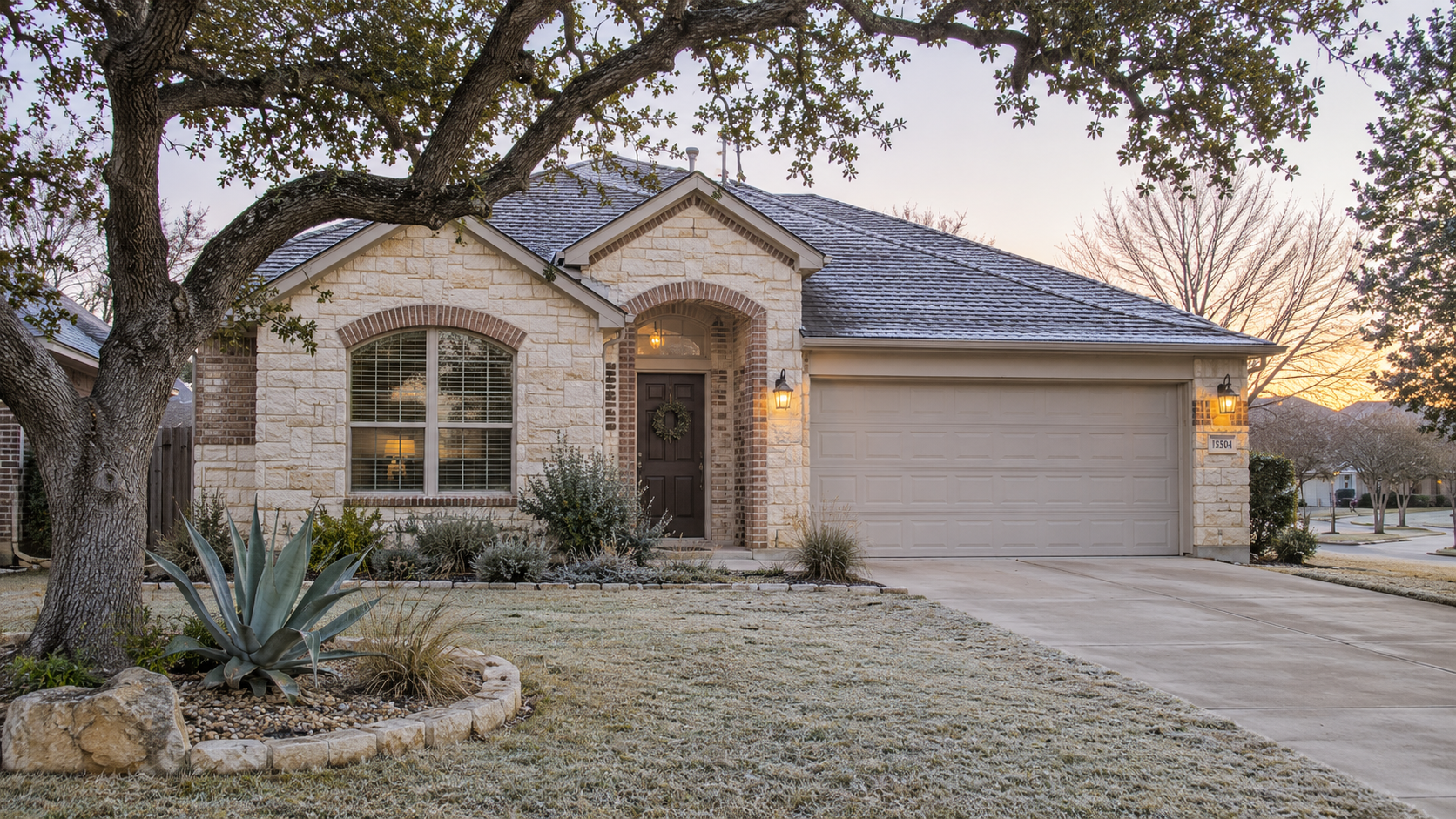
Austin Buyer Guide
Cold weather does not make a house good or bad. It makes some things easier to notice.
Buying a Home in Austin This Winter? 12 things to check during a tour
Austin winters are mild compared with northern climates, but freezing nights, sharp temperature swings and seasonal rain surface information that is harder to notice in July: heating performance, drafts, exposed plumbing, how a lot drains, tree structure and evidence of past repairs. None of that turns a showing into an inspection. It tells you what to ask about and what to have a professional evaluate before your option period ends.
At Shipman Partners, winter tours often lead to different questions than summer showings, especially around heating, plumbing, drainage and how well the home handles temperature changes. Each check below is organized the same way: what you can observe while standing there, what belongs in a question to the seller, and what goes to a licensed inspector or a specialist.
Why It Matters
Why Winter Tours Can Be Useful in Austin
A house under load behaves differently than a house at rest. In January the heating system is working, the indoor-outdoor temperature difference makes air leaks noticeable, rain shows where water goes on the lot, and bare canopy makes limb position visible from the ground. This does not make winter the best season to evaluate a home: summer reveals cooling performance and irrigation function that a winter tour will not. The point is narrower. Winter surfaces a particular set of questions earlier, which matters because your option period is short.
The Rule for This Whole Article
Observation is not diagnosis. A cold room, a stain or a patch of fresh drywall raises a question. It does not establish a cause, a defect or a cost. The job is to notice something and route it to someone qualified, not to decide what it means while standing in a stranger's hallway.
Check 01
How Evenly Does the Home Heat?
Walk the whole house and pay attention to temperature as you move. Rooms above a garage, on exterior corners, in converted spaces or at the end of a duct run most often feel different. Uneven heating has many possible explanations: insulation coverage, duct condition, equipment capacity or age, air sealing, orientation, or a space added without the system being resized. Some are inexpensive and some are not, and a showing cannot tell you which one you have.
- Observe during the tour
- Temperature differences room to room, cold spots at exterior corners, whether the system runs constantly, unusual noise or odor.
- Ask about
- Equipment age, last service date, whether rooms are known to run cold, and whether ductwork or insulation has been added.
- Verify during the option period
- Heating equipment and duct systems. If the findings warrant it, a licensed HVAC contractor can evaluate capacity and distribution.
Check 02
Exposed and Vulnerable Plumbing
Austin Water's current cold weather guidance addresses pipes in unheated or drafty areas, including attics and garages, along with outdoor faucets and hoses, automatic sprinkler systems, and water heaters per the manufacturer's recommendations. It also advises that everyone know where the main shutoff valve is. That doubles as a tour checklist: the garage ceiling and walls, under sinks on exterior walls, the hose bibs, and any detached structure with water service.
- Observe during the tour
- Piping in unconditioned space and whether it is insulated, exterior faucets and covers, the main shutoff location, and staining or patched drywall near plumbing.
- Ask about
- Whether pipes have been insulated, relocated or replaced, and whether there were repairs in any prior freeze.
- Verify during the option period
- Plumbing and water heaters. A licensed plumber can evaluate specific concerns; sewer or hydrostatic testing is a separate service.
What Fresh Repair Does and Does Not Tell You
New drywall, a repainted ceiling patch or a replaced cabinet base means repair work happened. It does not establish that the cause was a freeze, that the repair was inadequate, or that a problem remains. Ask a direct question and point the inspector at that spot.
Check 03
Ask About Prior Freeze or Water Damage
Texas requires a seller of residential property with not more than one dwelling unit to give the buyer a written Seller's Disclosure Notice, generally on or before the effective date of the contract. The statutory form asks about water damage not due to a flood event, previous structural or roof repair, water penetration from a natural flood event, flood insurance claims, and repairs made without necessary permits.
It is completed to the best of the seller's belief and knowledge as of the date signed, and the form states it is not a warranty of any kind and is not a substitute for any inspections the purchaser may wish to obtain. Several categories of sale are exempt entirely, including estate and foreclosure transfers and a newly built home not previously occupied.
- Observe during the tour
- Nothing. This check is about documents.
- Ask about
- Review the disclosure as early as it is available, ideally before writing an offer when possible. Then follow up in writing: what was repaired, when, by whom, and whether documentation exists.
- Verify during the option period
- Request documentation rather than a verbal account, and check permit history through Property Profile.
A seller is not obligated to answer every informal question, and "unknown" is legitimate from someone who did not own the house when something happened. Treat gaps as items for your inspector.
Check 04
Windows, Doors and Weather Sealing
A cold day makes air leakage easy to feel. Stand near windows and exterior doors, particularly on the windward side, and notice drafts, daylight around a door frame, damaged weather stripping, and condensation between panes. Older windows are not automatically defective: plenty of original wood windows in older Austin neighborhoods are serviceable and worth keeping, and replacement is a large expense whose payback depends on the specific house. Treat any blanket return-on-investment claim with skepticism.
- Observe during the tour
- Drafts, daylight around doors, deteriorated weather stripping, fogging between panes, and whether windows open and latch.
- Ask about
- Whether windows have been replaced, when, and whether any warranty transfers.
- Verify during the option period
- Exterior walls, doors, windows and glazing. An energy audit is a separate service you arrange yourself.
Check 05
Attic Conditions
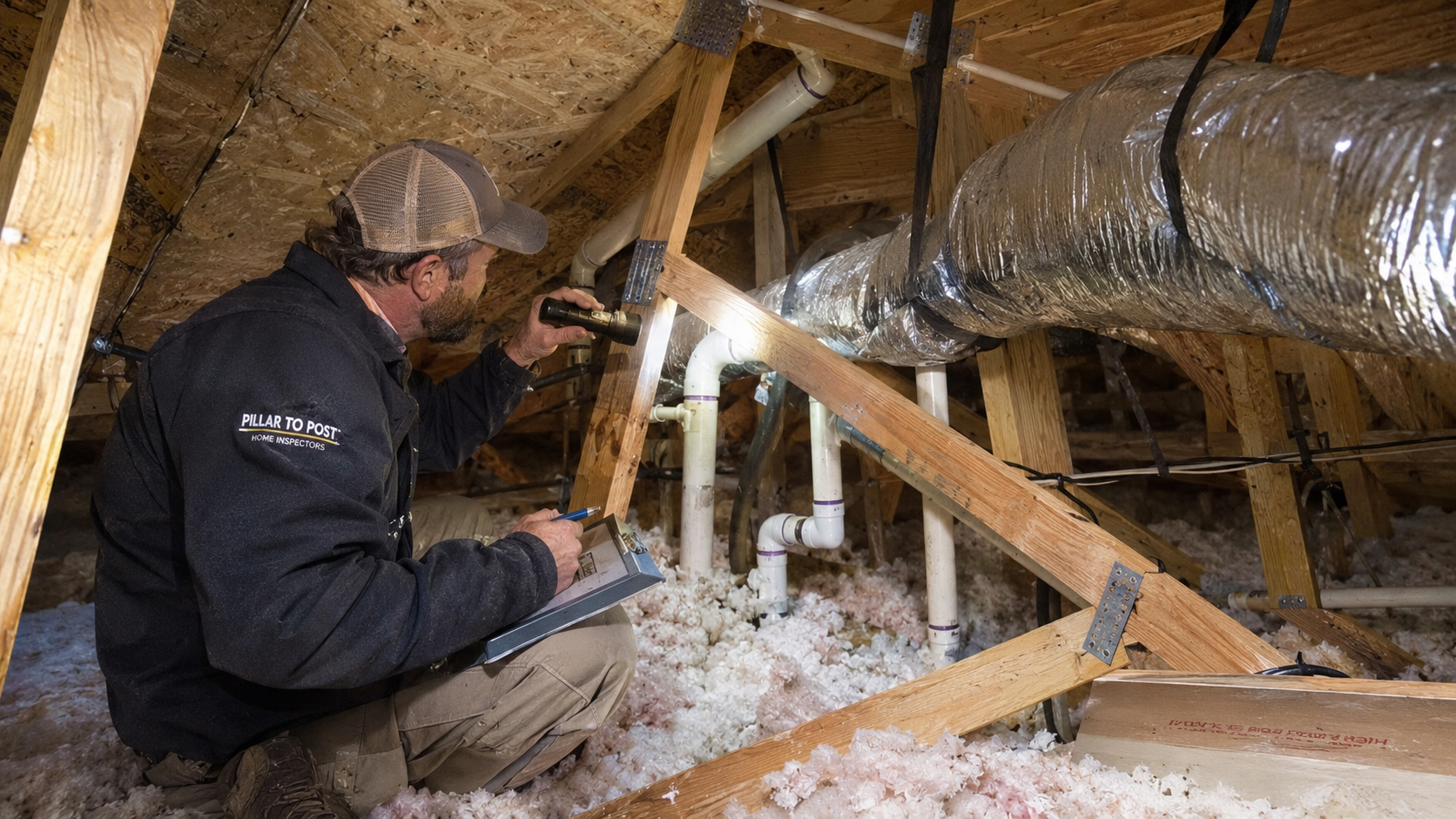
Do not climb into an attic during a showing. The footing is unreliable and nothing you learn up there justifies the risk. Look at the access hatch instead. This is an inspector's area, and TREC's standards define what that means: a Texas inspector reports the vantage point from which the attic was inspected, the approximate average depth of insulation, evidence of water penetration, ventilation that is not performing, and missing insulation. The same standards say an inspector is not required to enter attics where the opening is less than 22 inches by 30 inches or headroom is less than 30 inches, so read the report for where they actually went.
- Observe during the tour
- Hatch condition, whether it is weatherstripped and insulated, and staining on the ceiling below it.
- Ask about
- Whether insulation has been added or replaced, and whether there is a known pest or moisture history.
- Verify during the option period
- Read the vantage point and insulation depth reported, and ask about any area recorded as not accessible.
Check 06
Water Heater Location and Freeze Exposure
Where the unit lives matters more in winter than buyers expect. Attic installations put a tank and its connections above finished rooms, garage installations are common though the piping may be exposed, and exterior tankless units have their own manufacturer requirements for freeze protection. That is why Austin Water's guidance is to follow the manufacturer's recommendations rather than giving one rule. We do not publish a replacement timeline here: service life depends on the unit, the water, the installation and the maintenance history.
- Observe during the tour
- Location, whether an interior installation has a drain pan and line, corrosion at the base, exposed piping, and the data plate if readable.
- Ask about
- Age, whether it has been replaced, whether it was permitted, and what freeze protection an exterior unit has.
- Verify during the option period
- Water heaters are covered. A licensed plumber can evaluate an installation you have specific questions about.
Check 07
Drainage After Rain
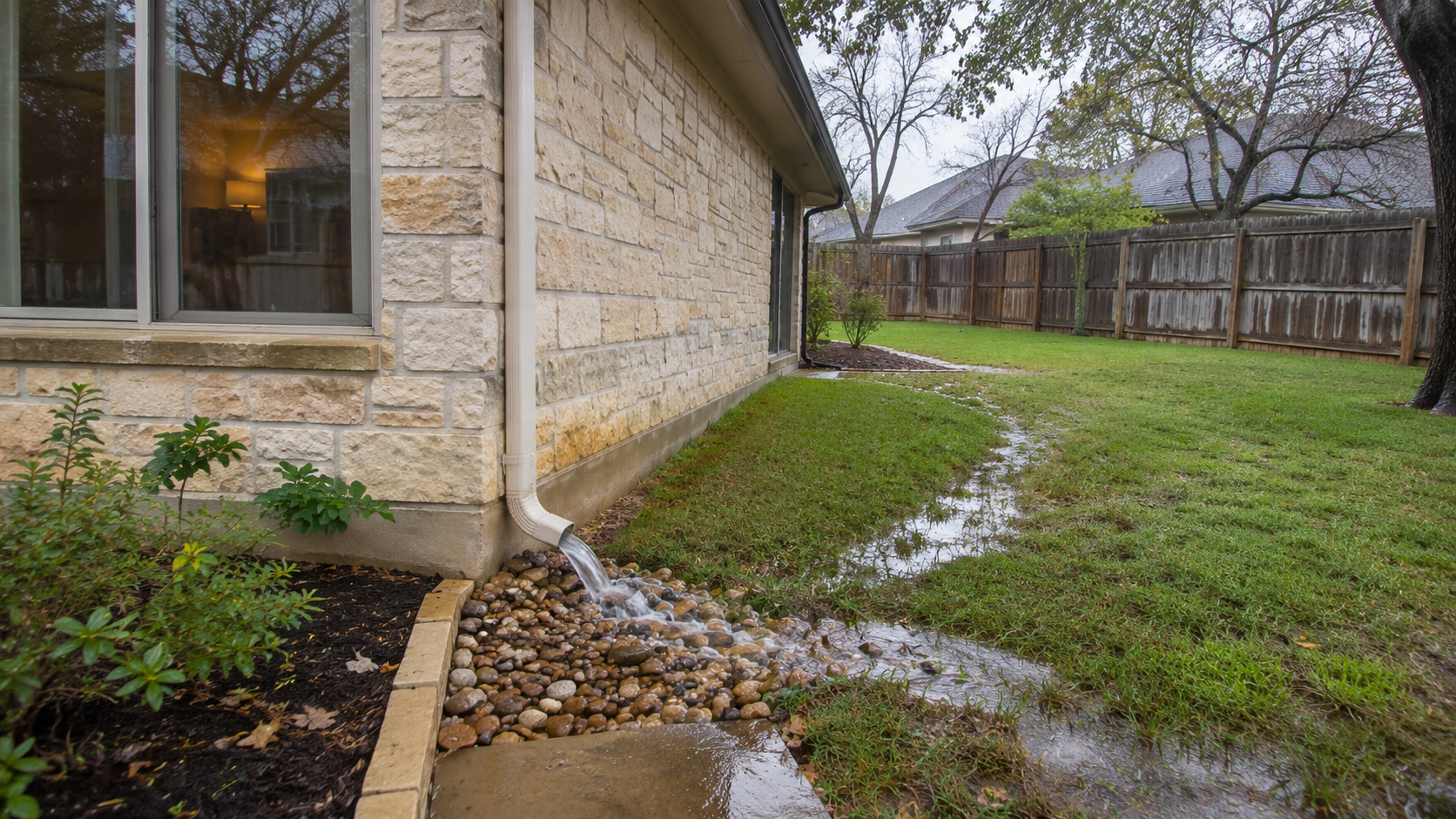
This is the most Austin-specific item on the list and the one worth planning around. If you can tour during or shortly after rain, do it. How water moves across a property can vary substantially from lot to lot, including between neighboring houses, and a dry showing tells you little about it. Walk the perimeter and note where water leaves the lot and whether anything obstructs that path.
TREC's standards require an inspector to report drainage around the foundation that is not performing, deficiencies in grade levels, and deficiencies in installed gutter and downspout systems. They also say an inspector is not required to determine area hydrology, the presence of underground water, or the efficiency or performance of underground or surface drainage systems. That gap is where a drainage contractor or engineer comes in.
Floodplain Is a Different Question
Check floodplain status separately, through the City of Austin's FloodPro tool and FEMA's flood map service center. A floodplain designation describes modeled risk associated with a waterway. It does not describe how rainfall moves across an individual lot, and a property outside a mapped floodplain can still have a drainage problem at the foundation. The two questions are related only in that both involve water.
- Observe during the tour
- Standing water, flow direction at the foundation, pooling at patios and additions, erosion, blocked paths, downspout discharge points.
- Ask about
- Whether drainage work has been done and whether water has ever entered the structure.
- Verify during the option period
- Grading and drainage, to the extent described above. Beyond that, a drainage contractor or structural engineer, plus the floodplain lookup.
Check 08
Roof, Gutters and Exterior Water Management
Look at the roof from the ground and from an upstairs window if there is a useful vantage point. Do not get on it. Rain makes gutter behavior obvious in a way no dry inspection can: you can see where a gutter overflows, where a downspout has separated, and where the water lands. None of that is a conclusion about the roof's remaining life, which cannot be determined from a driveway.
- Observe during the tour
- Visible roof damage from the ground, overflowing or disconnected gutters, soffit and fascia staining, water pooling against the slab.
- Ask about
- Roof age, whether it has been replaced or repaired, whether a warranty transfers, and whether a claim has been filed.
- Verify during the option period
- Roof coverings and structures. A roofing contractor can give a remaining-life opinion, which the inspection is not scoped to provide.
Check 09
Trees and Overhanging Limbs
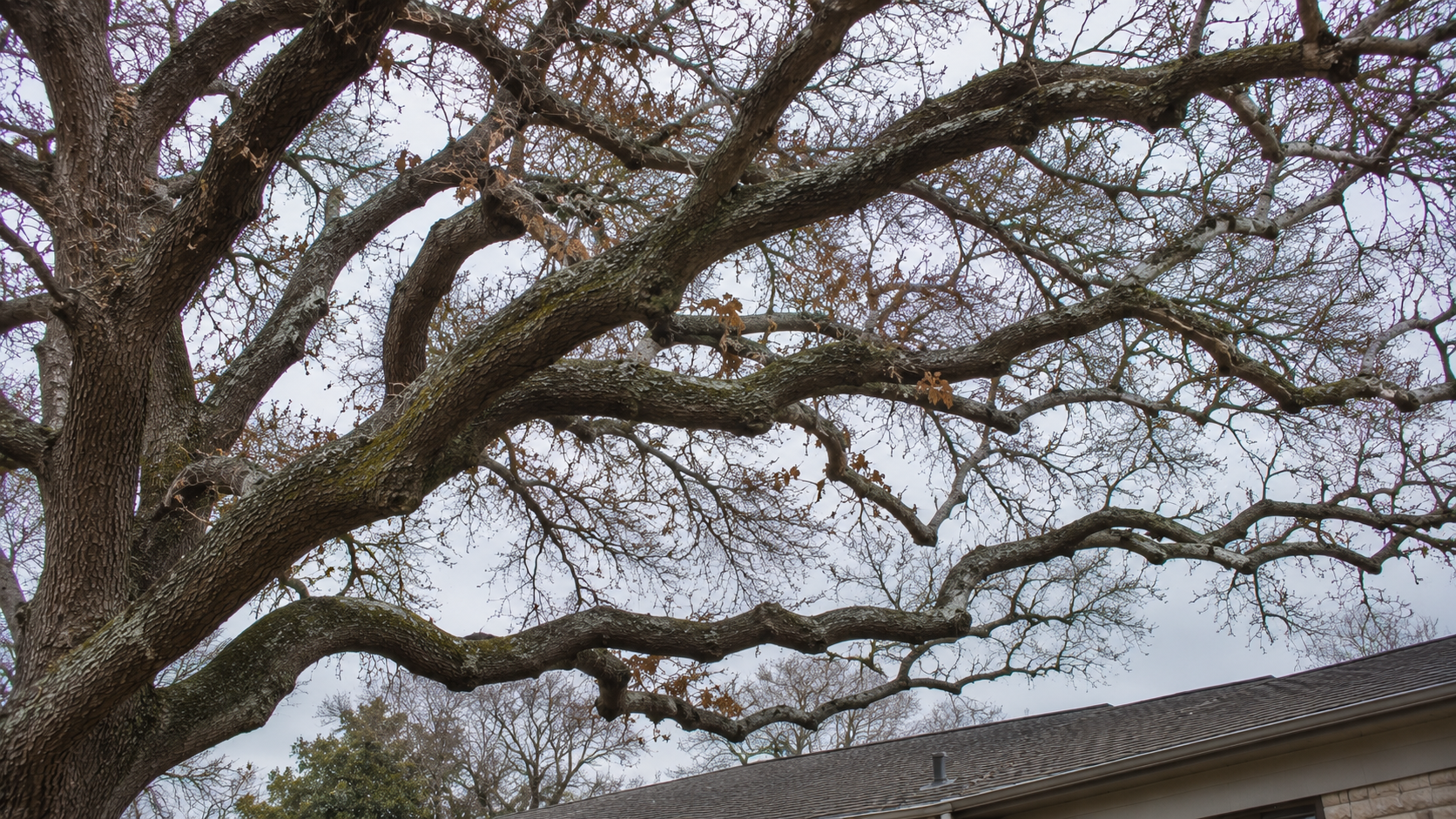
Bare canopy means trunk structure, deadwood and limb position can be easier to see from the ground in winter. Resist reading what you see as a liability list. Mature canopy provides shade and is a feature many Austin buyers want, and a large tree near a house is not inherently a hazard. Tree health is difficult to assess visually, which is what a qualified arborist is for.
There is also a regulatory dimension buyers routinely miss. On residential property in Austin, trees under 19 inches in diameter are not regulated, and a Tree Ordinance Review Application is required to remove a regulated tree, prune 25 percent or more of the canopy, or begin activity that may disturb the critical root zone. If your plan involves a pool, an addition or taking a tree down, understand that before you are under contract.
- Observe during the tour
- Limbs over the roof, driveway or utility lines, deadwood, trunk damage, proximity to the foundation, fresh cuts or stumps.
- Ask about
- Whether trees have been evaluated, trimmed or removed recently, and whether a permit was issued.
- Verify during the option period
- A certified arborist, if anything concerns you. A home inspection is not a tree evaluation, and the City Arborist governs what you may do later.
Check 10
Garages, Additions and Converted Spaces
Winter makes a poorly conditioned converted space obvious. A garage conversion, enclosed patio, bonus room or converted attic that runs noticeably colder raises three separate questions. Was the work permitted? Is the space counted appropriately in the advertised living area? Is it on the home's HVAC system, or a window unit?
A space can be cold because it is underinsulated, because it has no supply and return, or because the door stays closed. Cold does not establish that the work was unpermitted, and permit history is checkable through the City of Austin's Property Profile tool.
- Observe during the tour
- Temperature in the space, whether there are supply registers and a return, floor level changes, ceiling height.
- Ask about
- When the work was done, whether it was permitted and finaled, and whether the listed square footage includes it.
- Verify during the option period
- Pull the permit history, confirm the appraisal district's square footage, and have the inspector look at how the space is conditioned.
Check 11
Fireplaces and Chimneys
Winter is the season a fireplace is most likely to come up, and the season buyers most often take one at face value. Note whether it is wood-burning, a gas log set or a direct-vent unit, since those are different systems with different maintenance and safety considerations. Nothing visible from the room establishes that a flue is safe to use.
- Observe during the tour
- Configuration, visible damage to the firebox, hearth or exterior masonry, presence of a cap, a gas valve and key if present.
- Ask about
- When it was last used, when the flue was last cleaned or inspected, and whether work has been done to it.
- Verify during the option period
- Fireplaces and chimneys, to the extent the standards require. For a wood-burning unit you intend to use, a chimney professional's flue evaluation is separate.
Check 12
Exterior Faucets, Irrigation and Landscape Systems
Austin Water's guidance tells homeowners to shut off outdoor faucets, disconnect hoses, insulate faucets with a cover, and drain automatic sprinkler systems. A well-prepared seller will have done exactly that, so a sprinkler system that does not run in January has not failed; it may simply be winterized. Do not read seasonal shutdown as a defect.
One procedural point: under TREC's standards, landscape irrigation is an optional system. An inspector is not required to inspect it and does so only by agreement. If irrigation matters to you, arrange that explicitly rather than assuming it is included.
- Observe during the tour
- Exterior faucets and covers, hoses disconnected, irrigation heads and controller, a backflow device, and wet areas in freezing weather.
- Ask about
- Whether the system is winterized, when it was last serviced, whether any zones are out, and whether there is a rain sensor.
- Verify during the option period
- Add irrigation to the inspection scope in writing, or hire a licensed irrigator. It may have to wait for weather that allows the system to be charged.
The Important Part
A Winter Tour Is Not a Home Inspection
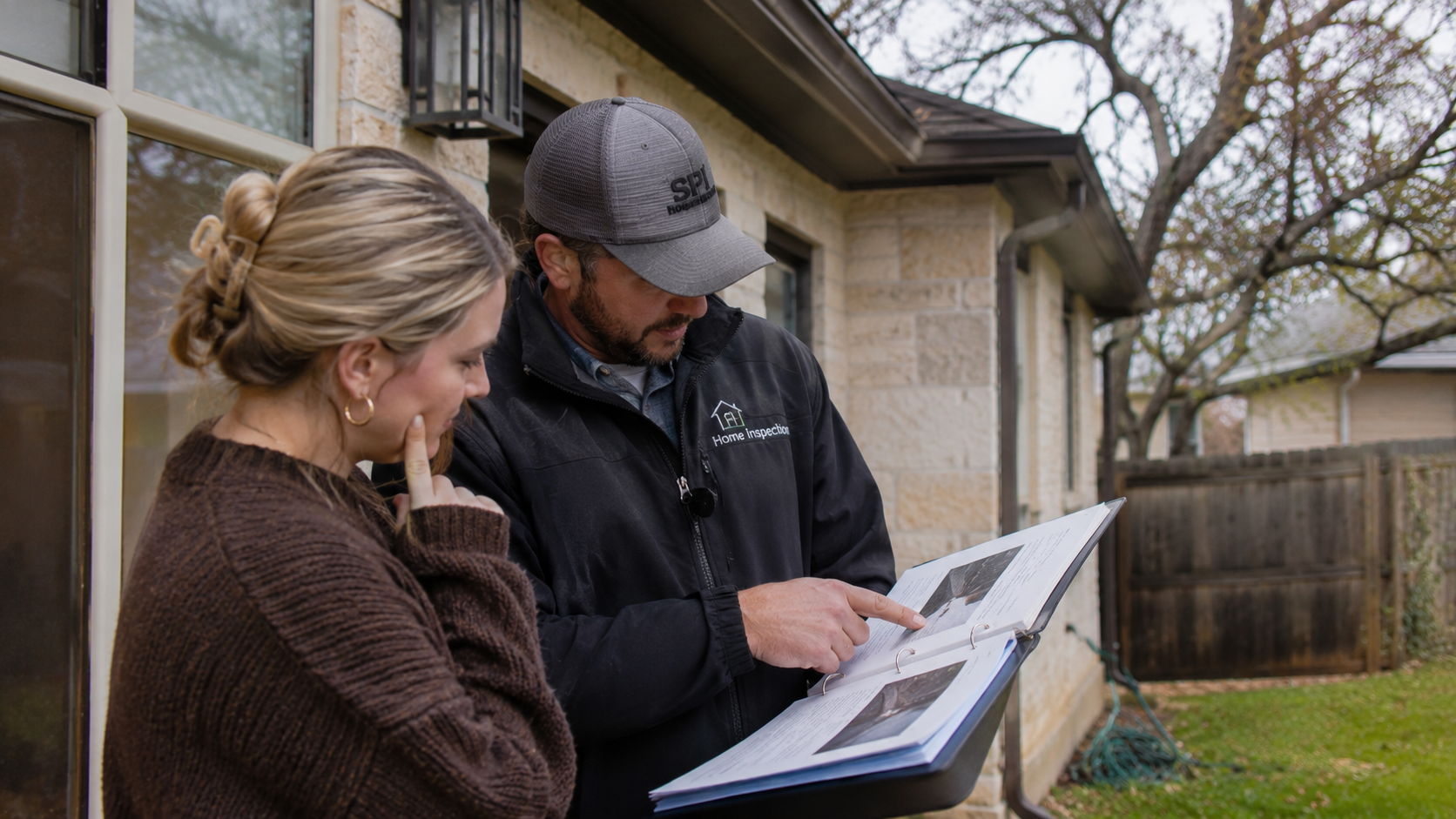
A showing exists so you can see the property and decide whether to pursue it. TREC's standards describe a real estate inspection as a limited visual survey and basic performance evaluation of a building's systems and components, not intended to be a comprehensive investigation or exploratory probe. The same standards say an inspector is not required to determine the cause or source of a condition, or the cause or effect of deficiencies, and is not required to inspect anything buried, hidden, latent or concealed.
That defines the whole chain. You notice. The inspector reports deficiencies within a defined scope. A specialist determines cause and cost. Skip from the first step to the last and you will either talk yourself out of a good house or into a bad assumption.
The mechanism that gives you room to do this is the termination option, a negotiated right to terminate during a defined period. It is a contract term, not an automatic feature, and its length and fee are negotiated. The legal effect of contract language belongs to an attorney.
Follow Up
Questions to Ask After a Winter Showing
Send these in writing through your agent. A seller is not legally required to answer every informal question, but a written request creates a record and often produces documents more useful than the answer itself.
Has the property had freeze-related plumbing repairs, and are there invoices?
Have any pipes been insulated, relocated or replaced?
When was the HVAC system last serviced, and are any rooms known to run cold?
Has any drainage work been done, and has water ever entered the structure?
Have large trees been evaluated, pruned or removed recently, and was a permit issued?
Were any additions or conversions permitted and finaled?
Are there known roof or water-intrusion issues, past or present?
Are there transferable warranties on the roof, HVAC, water heater or windows?
Is the irrigation system currently winterized, and are any zones out of service?
Due Diligence
What to Verify During the Option Period
For most residential purchases, a general inspection by a licensed inspector is the logical starting point. It covers structural, electrical, HVAC, plumbing and appliance systems within TREC's defined scope, and its findings tell you which specialists, if any, are worth the calendar days. Most properties need none of the below.
Usually worth it when
- HVAC contractor: the report flags equipment or distribution issues, or rooms are meaningfully uneven
- Plumber: prior freeze repairs, exposed attic plumbing, or a sewer line concern on an older property
- Roofer: you need a remaining-life opinion, which the inspection does not provide
- Structural engineer: the inspector notes foundation performance concerns
Situational
- Arborist: large trees near the structure, deadwood or trunk damage, or removal plans
- Drainage contractor: water moving toward the foundation, or standing water you saw
- Electrician: the report flags panel, grounding or branch circuit issues
- Licensed irrigator: the system matters to you and could not be run in freezing weather
Schedule the general inspection early enough in the option period to leave time for any specialist it points you toward. Specialists book out, and in winter you should also account for a system that cannot be safely tested until the weather allows.
Perspective
Do Not Confuse Winter Imperfections With Deal Breakers
Most houses have something. Older homes accumulate quirks that are not defects, and a long list of small inspection items is the normal result of inspecting a building people have lived in. The question is never whether a house is perfect, but whether what you found is understood, priced and acceptable to you. Documented repairs and service records can make it easier to understand what work was performed and when. Repairs and credits are also negotiable, though how much room you have depends on the property's market time, the competition for it and the terms on the table. Our Austin winter real estate guide covers where that leverage comes from.
A visible issue should trigger investigation, not panic and not a reflexive termination. Whether to proceed, renegotiate or walk is your decision.
Questions
Questions We Get About Winter Home Tours
Is winter a good time to inspect a home in Austin?
It is a useful time, not a best time. Winter makes heating performance, drafts, drainage during rain and tree structure easier to observe, and is a poor time to evaluate cooling performance or irrigation.
What should I look for after a freeze?
Austin Water's guidance points at unheated or drafty areas, exterior faucets and irrigation equipment. Inside, look for staining, fresh drywall patches or warped flooring near plumbing, then ask whether the property had freeze-related repairs and request documentation. Evidence of repair is a reason to ask, not proof of a problem.
Should I worry about pipes in the attic?
Attic plumbing is common in Central Texas and is not a defect by itself. Austin Water's guidance is to insulate pipes in unheated or drafty areas, so what matters is whether that has been done. Ask your inspector to note it specifically.
Can rain really help reveal drainage issues?
Yes, and it is one of the better reasons to tour in winter. Standing water, flow toward the foundation and overflowing gutters are visible after a storm and essentially invisible on a dry day. Adequacy is still a specialist's call.
How can I tell if a house is poorly insulated?
You cannot, from a showing. You can notice symptoms: rooms that stay cold, drafts at exterior walls, a system that runs constantly. A Texas inspector reports the approximate average depth of attic insulation and missing insulation; an energy audit gives a fuller picture.
Should I test the heat during a showing?
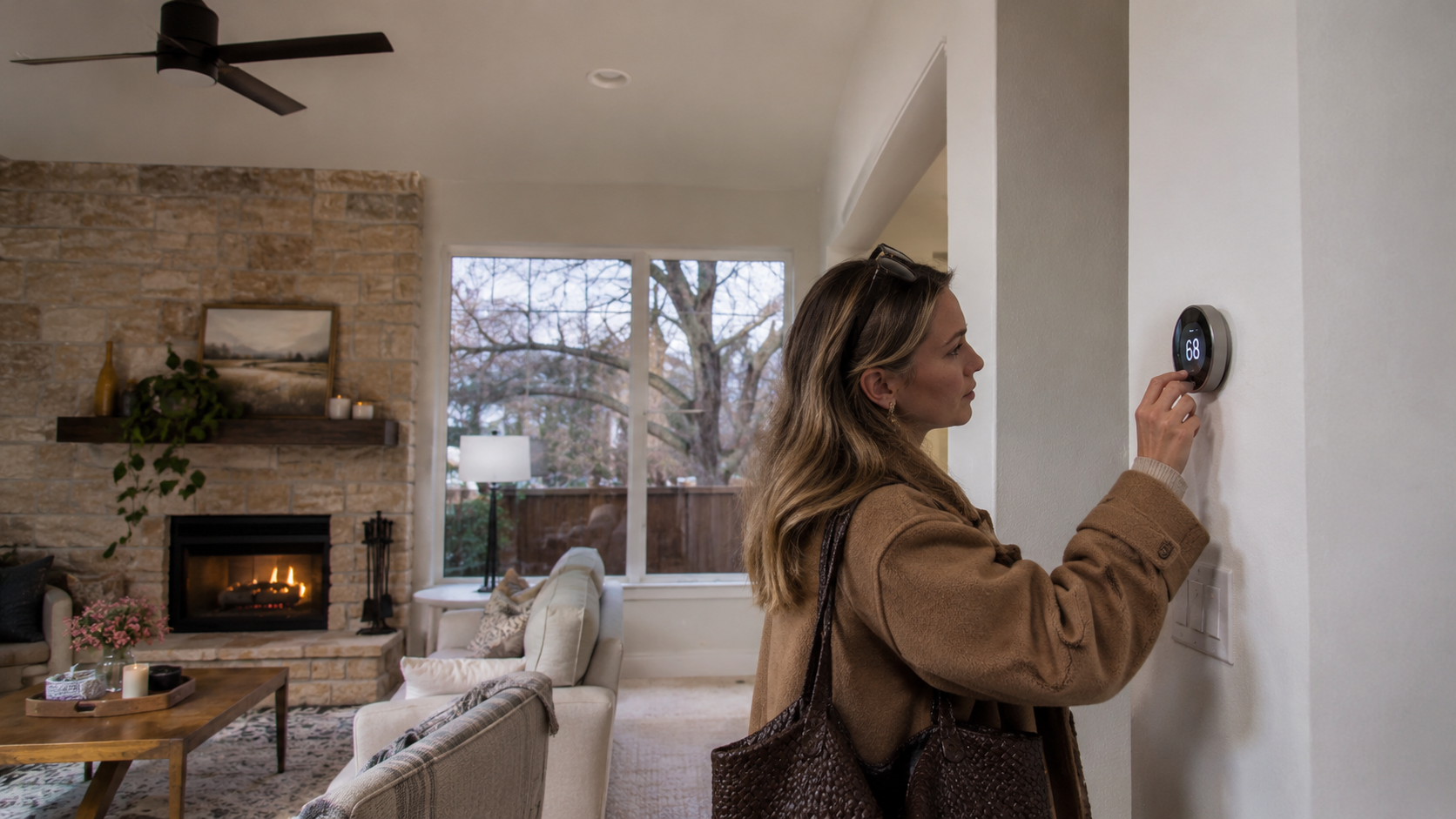
Ask your agent to arrange it rather than adjusting someone else's thermostat. A brief test is not a performance evaluation; your inspector operates the heating equipment as part of the inspection.
What should I ask about previous freeze damage?
Start with the Seller's Disclosure Notice, which asks about water damage not due to a flood event and about previous structural or roof repair. Then ask in writing what was repaired, when, by whom, and whether documentation exists.
Does a home inspection check trees or drainage?
Drainage, partly: an inspector must report drainage at the foundation that is not performing, grade deficiencies and gutter deficiencies, but not determine area hydrology or the performance of drainage systems. Trees are not a home inspection item, so a certified arborist is the right professional. Landscape irrigation is optional and inspected only by agreement.
The Bottom Line
The Goal Is Not a Perfect House
Winter gives you information earlier than you would otherwise get it. But the goal of a showing is not to find a flawless property, and it is not to diagnose anything. It is to notice what deserves a closer look, so your option period gets spent on the right questions and the right professionals rather than on everything at once.
Touring homes in Austin this winter?
We tour with buyers year round and help with property condition questions, disclosure follow-ups, permit history, comparable sales and which specialists are worth bringing in. We are a brokerage, not inspectors or engineers, so our job is to get the right questions in front of the right qualified professionals before your option period ends.
Sources
Inspection scope. TREC Real Estate Inspector Standards of Practice (22 TAC 535.227 through 535.233), for the definition of an inspection, the general limitations, grading, drainage and attic reporting under 535.228, and irrigation as an optional system under 535.233.
Seller's disclosure. Texas Property Code Chapter 5, Section 5.008, for the statutory form, the belief-and-knowledge standard, the warranty and inspection-substitute disclaimers, and the exemptions.
Freeze preparation. Austin Water, Cold Weather Tips, for pipe insulation, exterior faucets, sprinkler systems, water heater manufacturer guidance and the main shutoff valve.
Trees. City of Austin Development Services, Trees on Residential Property, for the 19-inch threshold, the Tree Ordinance Review Application triggers and critical root zone protection. The City Arborist is the authority on compliance questions.
Property records. City of Austin Property Profile, for looking up official property records by address.
Floodplain. City of Austin FloodPro and the FEMA Flood Map Service Center. All sources verified November 2026.
What this article does not contain. No inspection failure rates, repair costs, system life expectancies, or statistics about freeze damage. No claim that any neighborhood is more or less likely to have plumbing failures. Where a source did not support a statement precisely, it was narrowed or removed.
This article is general information for Austin-area homebuyers and is not legal, engineering, inspection or construction advice. Shipman Partners Real Estate is a licensed Texas real estate brokerage. We do not perform home inspections, engineering evaluations, arborist assessments or any other licensed technical service, and nothing here is a warranty or representation about the condition of any property. Direct property condition questions to a licensed inspector or the appropriate qualified professional, contract questions to an attorney, and regulatory questions to the City of Austin. Rules and City guidance change; every regulatory statement above was verified in November 2026. Shipman Partners is committed to fair housing and equal opportunity.